

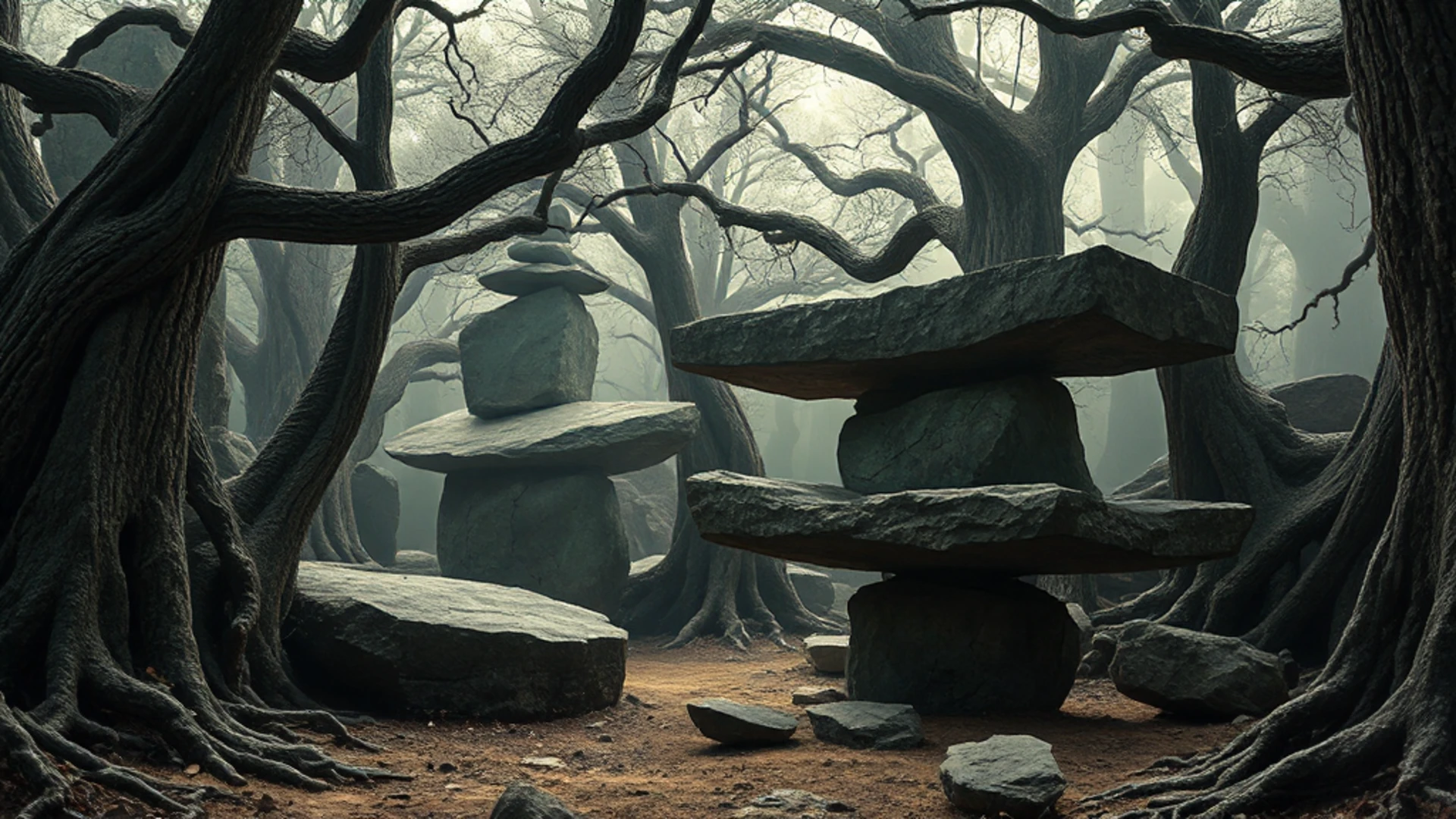
Hold the Grove Together
Place ancient stone, steady fragile structures, and restore balance before the whole landscape begins to shift.
In Stonegrove: Ancient Balance, everything's about weight and balance — that's basically how you talk to the world around you. Move heavy stone blocks, stabilize platforms, and read the tension in the land around you. The grove does not react instantly. It warns you first — with cracks, movement, and subtle strain — before it gives way.
A Place Built to Endure, Not to Forgive
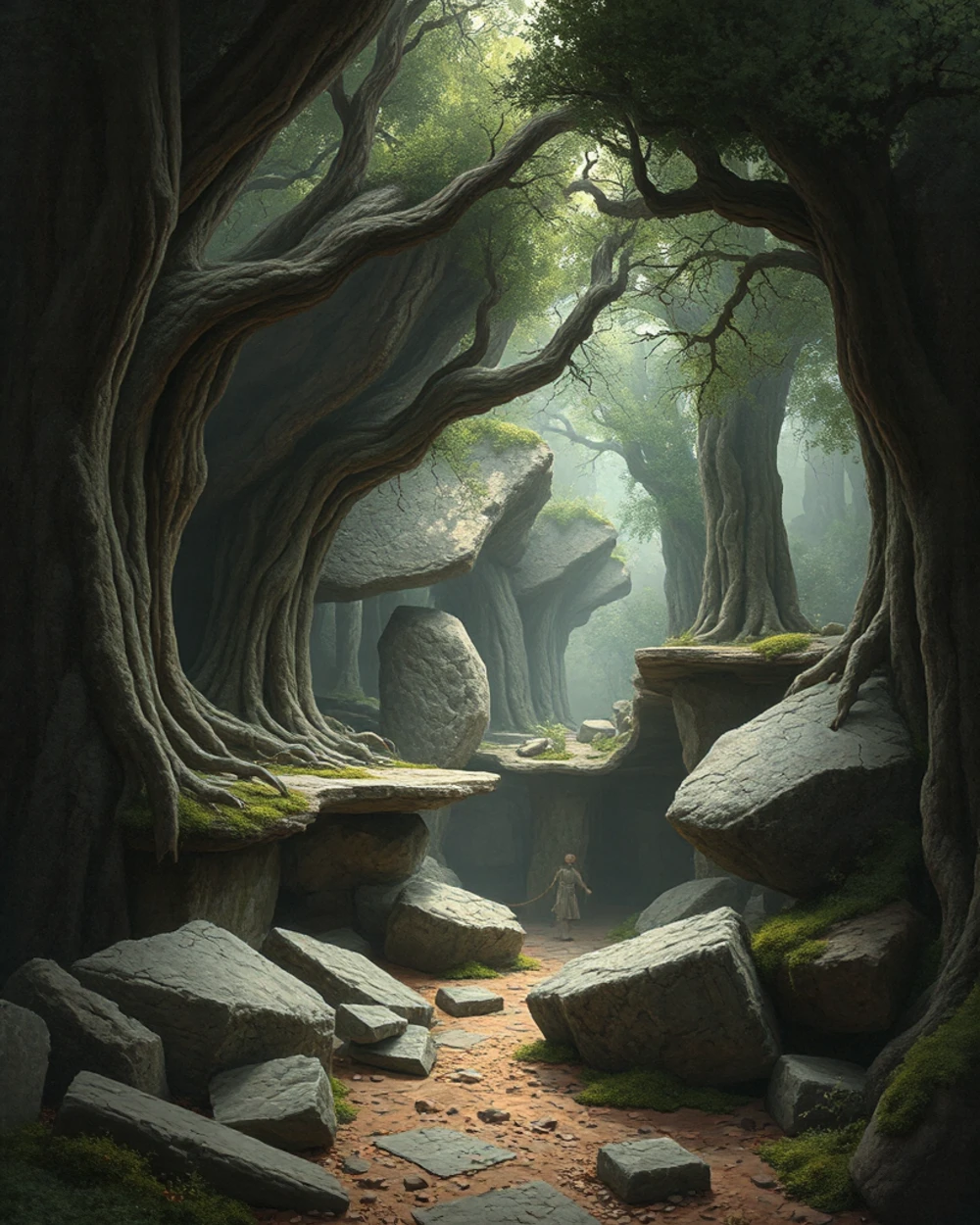
Stonegrove feels older than memory. Trees have grown around ruined supports. Roots pass through fallen platforms. Massive stones rest in positions that seem impossible until you realize they have been held there by balance alone.
This isn't just some pretty ruins you walk through. The place is still alive, still working — it just does it quietly.
Long ago, the grove was shaped by careful hands. Weight was not treated as force alone, but as order. Every platform, pillar, and suspended slab was placed to support something else. Every structure carries a hidden relationship to the space around it.
Now that order has begun to fail. Some stones have slipped. Some foundations have weakened. Some paths remain possible only because nothing has disturbed them yet. You're not here to dominate anything. You're more like someone trying to figure out how this whole place hasn't fallen down yet.
Place Carefully. Watch Closely. Adjust Slowly.
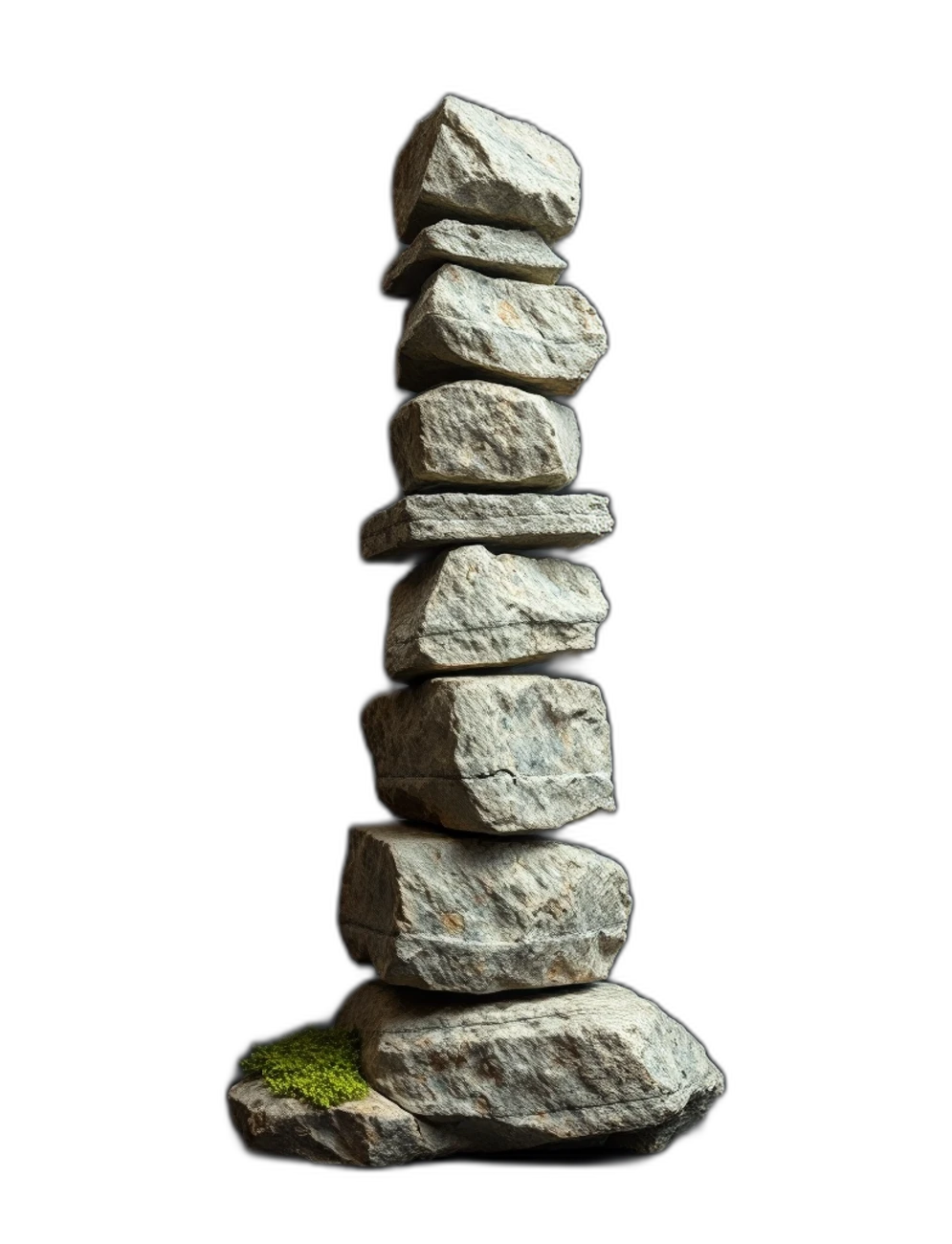
Place Stone Blocks
Move and position heavy blocks across ancient platforms, supports, and pressure points. Every placement changes the state of the environment.
Balance Weight Across Structures
Some areas need counterweight. Others need support distributed evenly. You are not only solving a path — you are stabilizing a system.
Prevent Collapse
The world reacts to bad decisions. Strain appears first, then movement, then damage. Collapse is not always instant, which makes every warning feel more tense.
Read the Environment
Cracks, tilts, dust, sound, and shifting surfaces all signal what the grove is trying to tell you. Observation is as important as action.
Nothing in Stonegrove Stands Alone
The central idea of the game is simple: every structure affects another.
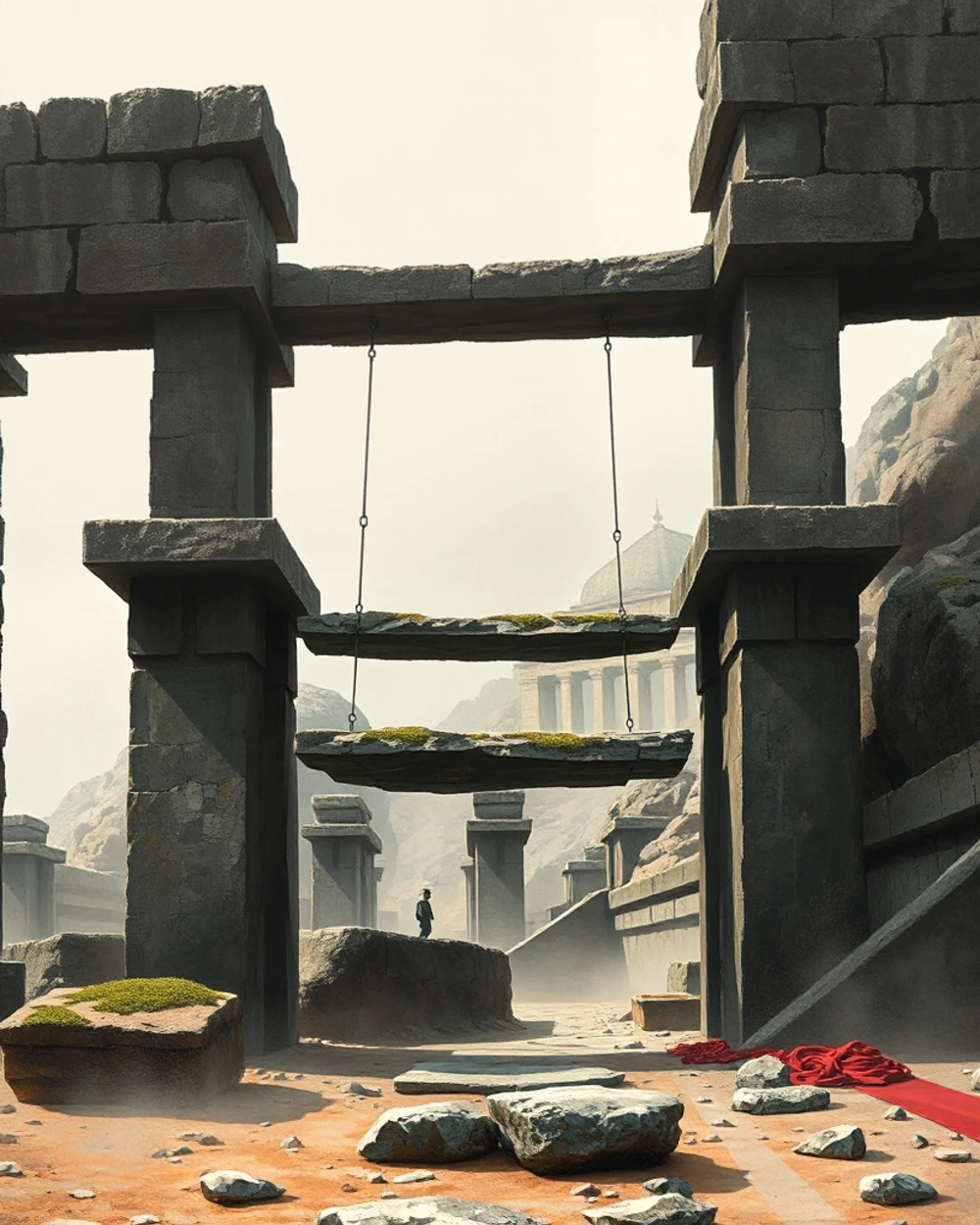
A stone placed on one side of a platform may stabilize a bridge in the distance. Removing a block to clear a path may weaken a support you were not watching. A tower that appears decorative may actually be holding the balance of an entire section of the grove.
That is what makes the game satisfying. The player is not solving isolated puzzles. They are learning relationships. Weight travels. Pressure transfers. Stability is shared.
A Physics Puzzle with Real Weight
Physics-based puzzle gameplay centered on placement and balance.
Ancient stone structures that respond dynamically to pressure.
The world shows you when things are going wrong — cracks appear, stuff starts shifting, things slowly fall apart.
Multi-step puzzles where one action affects distant systems.
A grounded atmosphere shaped by ruins, roots, and old mechanisms.
The story's in the buildings themselves — how they're crumbling, what's still holding up.
Gradual complexity that rewards patience over speed.
Everything feels like it could break because, honestly, it's barely hanging on as it is.
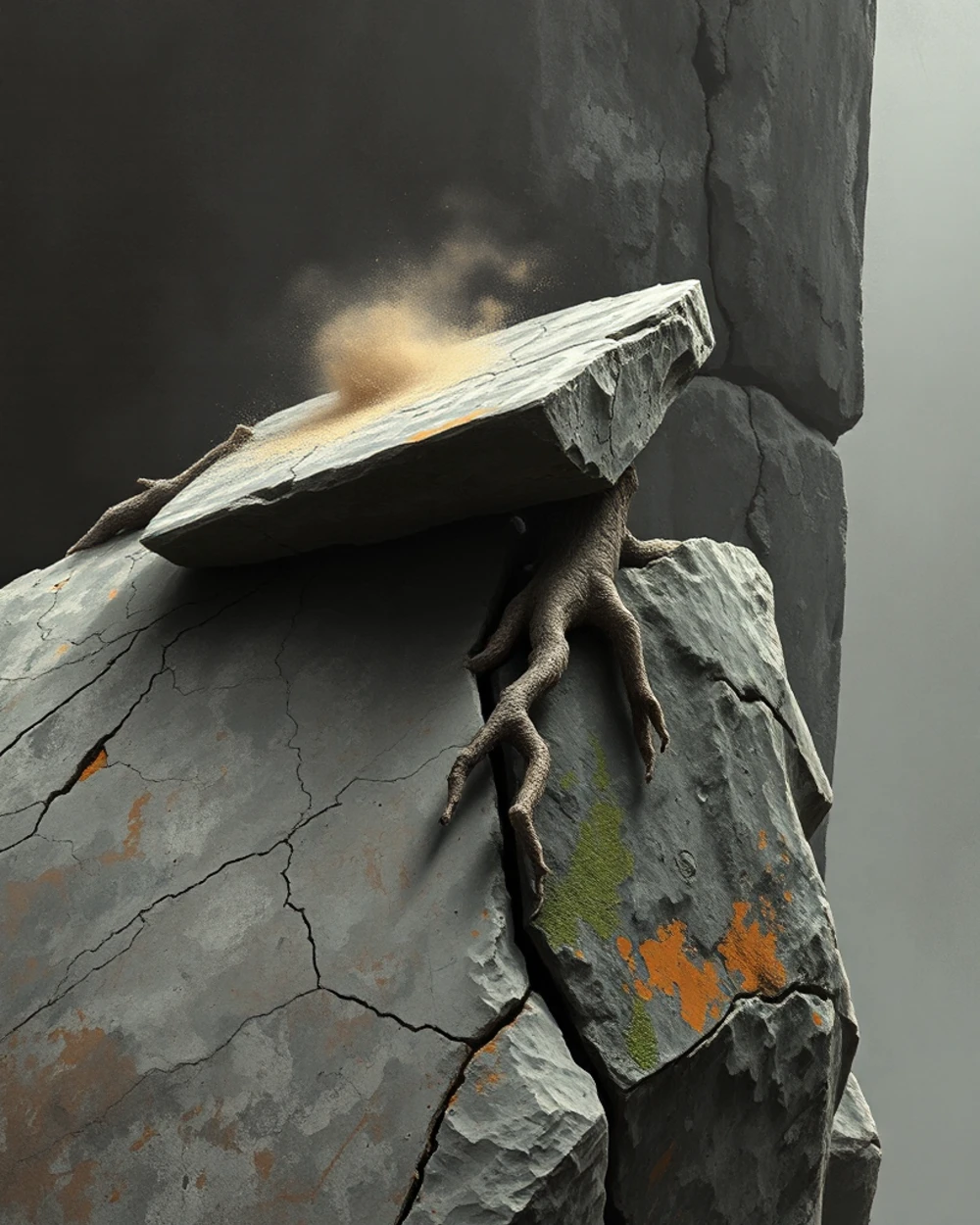
Imbalance Is Never Silent
One of the strongest parts of Stonegrove: Ancient Balance is how the environment responds when something is wrong. Not with bright warnings. Not with game-like alarms. Instead, the grove speaks through physical signs.
It's tense, but in a quiet way. You start trusting what the environment's telling you because it never lies — it just whispers instead of shouting.
When things finally do collapse, it makes sense. It's not some random gotcha moment or over-the-top spectacle. Just the natural consequence of ignoring the balance too long.